Onsite and virtual electrical safety training built for the hazards of Maryland’s port operations, biotech and pharmaceutical manufacturing, data centers, and construction industries — led by Certified Safety Professionals with 30+ years of field experience.
Maryland’s economy is shaped by the Port of Baltimore, a dense concentration of federal government and biotech/pharmaceutical facilities, and one of the busiest data center corridors on the East Coast. We deliver NFPA 70E 2024 training built specifically for the work Maryland qualified electrical workers actually do.
Every industry sector in Maryland carries its own electrical hazard profile. We build curriculum around the specific equipment, voltage levels, and facility types your workers encounter every day.
Maryland has no in-state oil or gas production, but fuel terminal operations at the Port of Baltimore and natural gas distribution infrastructure across the state still require qualified electrical workers trained on switchgear, SCADA control power, and NFPA 70E-compliant lockout/tagout procedures.
Maryland has no petroleum refining, but its pharmaceutical and biotech manufacturing facilities, concentrated around the I-270 corridor and Baltimore, operate cleanroom-adjacent electrical systems, 480V distribution, and process equipment requiring specialized arc flash hazard analysis.
Maryland construction sites and utility infrastructure face a mix of NFPA 70E/OSHA 29 CFR 1926 Subpart K construction electrical hazards and 1910.269 utility line work, particularly amid dense commercial and federal facility construction near Washington, D.C.
Municipal electric and water/wastewater utilities across Maryland, including facilities serving the Port of Baltimore, require training on switchgear, transformer maintenance, and OSHA 29 CFR 1910.269 compliance alongside NFPA 70E.
Maryland’s data center corridor, extending from the Baltimore-Washington region into Frederick and Hagerstown, operates critical UPS systems, 480V bus duct, and generator switchgear requiring trained qualified electrical workers for live work justification and energized electrical work permits.
Maryland manufacturing, spanning aerospace/defense, biotech, and food processing, runs complex 480V distribution systems where arc flash studies and qualified worker training are required under MOSH standards.
Maryland operates its own OSHA-approved State Plan, administered by Maryland Occupational Safety and Health (MOSH) under the Maryland Department of Labor. MOSH standards must be at least as effective as federal OSHA requirements, and the agency has adopted federal electrical safety standards — including 29 CFR 1910 Subpart S — that incorporate NFPA 70E by reference.
MOSH enforces a General Duty Clause equivalent requiring employers to protect workers from recognized hazards, including arc flash. Training qualified electrical workers to NFPA 70E 2024 standards is the most defensible compliance posture available to Maryland employers, and MOSH compliance officers routinely reference NFPA 70E during electrical safety inspections.
For Maryland’s biotech, data center, and port operations, the intersection of MOSH electrical standards and facility-specific hazard categories creates a layered compliance obligation that demands training tailored to each site’s equipment, PPE ratings, and written safety procedures.
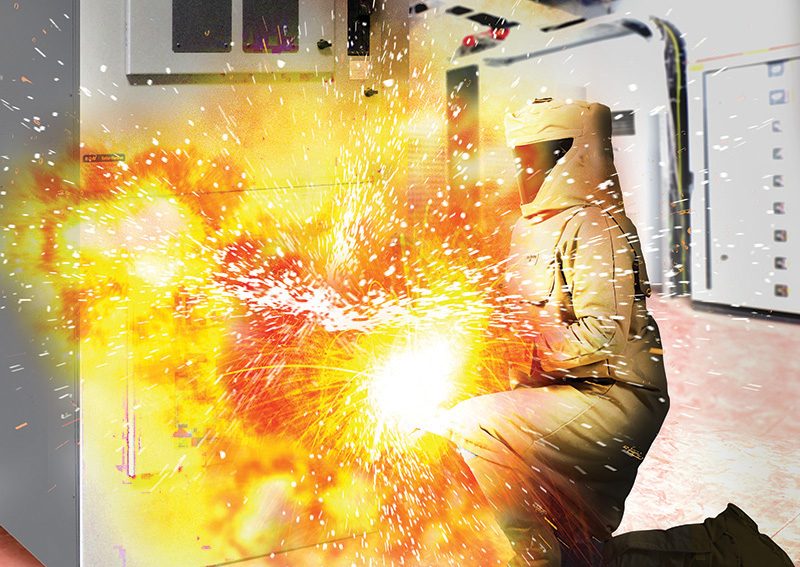
Onsite delivery to your facility, anywhere in the state
Both formats are available onsite at your facility or virtually via Zoom or Microsoft Teams. All sessions are led live by a Certified Safety Professional.
Full NFPA 70E 2024 curriculum covering all requirements for qualifying electrical workers in oil/gas, petrochemical, industrial, and construction environments.
Best for: Initial qualification or triennial retraining of electrical workers in oil/gas and industrial settings.
Request a QuoteCondensed review for workers with prior NFPA 70E training, covering 2024 edition changes, regulatory updates, and reinforcement of core electrical safety practices.
Best for: Annual compliance refreshers at industrial and utility operations.
Request a QuoteAnswers to the questions Maryland safety managers and EHS directors ask most often.
MOSH does not explicitly cite NFPA 70E in its adopted electrical standards, but it is used as the recognized industry standard for demonstrating compliance with the state’s General Duty Clause equivalent. Employers who follow NFPA 70E 2024 have the strongest available defense during a MOSH inspection. In investigations involving electrical incidents at Maryland data centers or biotech manufacturing facilities, NFPA 70E compliance is routinely used to evaluate whether an employer took adequate precautions against recognized arc flash hazards.
Yes. We routinely deliver training at operating data centers, biotech manufacturing sites, and port-adjacent facilities across Maryland. We build the curriculum around your facility’s specific equipment, hazard categories, and PPE inventory. Before each engagement we review your arc flash study, one-line diagrams (where available), and existing electrical safety program to ensure the training addresses the actual hazards your workers face on the floor.
We cap all sessions at 20 participants to ensure every worker receives individual attention and meaningful engagement with the material. Smaller group sizes produce measurably better outcomes — reflected in our 9.55/10 participant rating. If your workforce requires training for more than 20 workers, we schedule additional sessions at your facility rather than exceeding the cap.
We respond to every inquiry within 24 hours. Tell us your location, workforce size, and industry and we’ll build a program around your specific hazards and schedule.